 Introducing iCallify Built by ASTPP’s Engineering Team to Power Modern Contact Centers
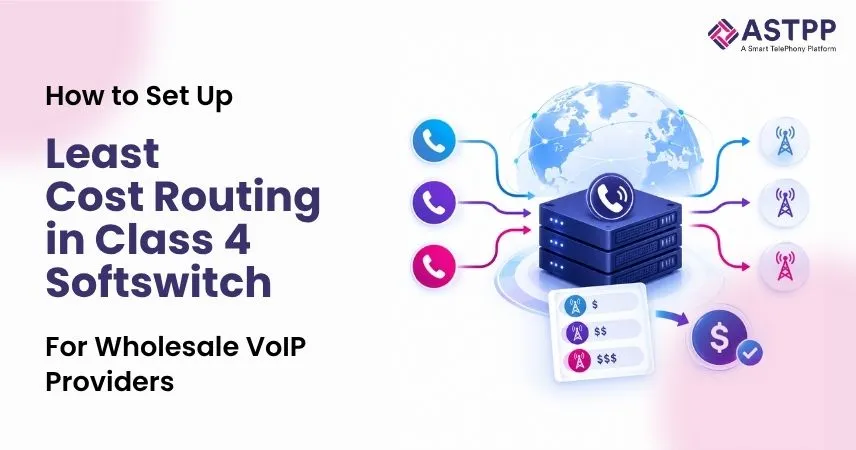
Quick Summary: Least Cost Routing (LCR) helps wholesale VoIP providers optimize call paths by comparing carrier rates, routing rules, and call quality. This guide explains LCR configuration, Class 4 Softswitch integration, failover, rate management, and how ASTPP helps improve routing efficiency and protect margins.
Margins in wholesale VoIP have been getting thinner for years. Carriers that remain competitive often treat routing as a profit function, not just a technical task. At the center of this is least cost routing VoIP configuration built into a Class 4 Softswitch.
The Class 4 Softswitch Solution decides, call by call, which carrier receives the traffic and how that choice affects your margins. If routing is set up incorrectly, a provider can lose margin on thousands of calls every day without seeing an alarm. When routing works well, it becomes an important way to protect margins as per-minute rates continue to fall.
This guide explains what a working least cost routing VoIP setup looks like inside a Class 4 Softswitch, including rate tables, routing rules, failover logic, and strategies that help protect margins instead of simply moving calls without considering their cost.
What Least Cost Routing Actually Does Inside a Class 4 Softswitch
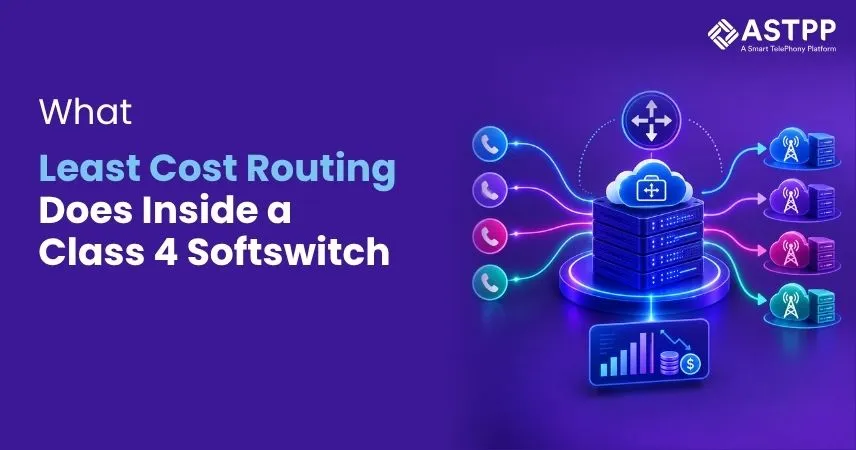
A Class 4 Softswitch is designed to handle bulk voice traffic between carriers rather than individual subscribers like a Class 5 system. Each call may need to be routed through one of dozens or even hundreds of carriers. Since each carrier can offer different rates for the same destination, choosing the right route can be difficult to manage manually.
LCR configuration in a Class 4 softswitch automates this process. Instead of manually comparing rate sheets, the softswitch checks rate tables, applies routing rules, and sends each call through a route that meets the required cost and quality criteria. For a deeper look at how modern Class 4 softswitches use LCR and real-time network conditions to optimize wholesale call routing, explore our guide to how a modern Class 4 softswitch helps wholesale VoIP providers scale faster.
The term “least” does not mean choosing the cheapest route every time. A poorly configured LCR system may always select the lowest rate and reduce call quality. Failed calls and poor carrier performance can then cost more than the savings from the cheaper route.
A properly configured system considers both cost and call quality. It can evaluate factors such as answer seizure ratio, post-dial delay, and carrier reliability before selecting a route.
Why Wholesale VoIP Call Routing Breaks Down Without LCR
Most wholesale carriers do not lose money because they chose the wrong platform. They lose money because their wholesale VoIP call routing was not configured properly for their business needs. Common problems include:
- Rate tables become outdated:Carrier rates can change daily or even several times a day. If the routing engine uses an old rate sheet, calls may be routed based on outdated pricing.
- Every carrier is treated the same:Without weighted priority or quality scoring, the system may send calls to a low-cost but unreliable carrier instead of a proven one.
- No failover logic:When the primary route fails, calls should automatically move to another carrier. Without automatic failover, manual action can lead to dropped calls and unhappy customers.
- Rates and CDRs are kept in separate systems:When billing and routing use different data, providers may not know in real time whether a route is still profitable.
- New routes go live without testing:New carrier interconnects may be added directly to production without checking ASR or PDD first. This can allow call quality problems to reach customers.
The Business Impact of Getting LCR Right
The financial impact of routing decisions can be significant. According to a report, wholesale carriers terminated approximately 217 billion minutes of traffic in 2024, down 8% from 2023.
A shrinking market means wholesale operators are competing for fewer terminating minutes. At the same time, margin per minute remains an important factor they can control. A Class 4 Softswitch with well-configured least cost routing VoIP helps protect margins as traffic volumes change and carrier rates continue to shift.
Beyond margin protection, a well-configured LCR setup gives wholesale providers three important benefits that a spreadsheet-based routing process cannot easily provide:
- Real-time visibility:See which routes are profitable based on current rates and traffic.
- Faster response to rate changes:Update routing within minutes when a carrier changes its rates instead of waiting days.
- Easy scalability:Manage routing more efficiently as the carrier list grows from a few interconnects to hundreds.
VoIP Least Cost Routing Setup, Step by Step
A reliable VoIP least cost routing setup is built in several steps. Missing any of these steps can lead to margin loss later, even if the initial setup seems to work well.
- Centralize carrier rate tables:Keep all carrier rate sheets in one system and use a consistent format. Update the rates as often as the carriers change them.
- Define routing rules and priorities:This is where Class 4 Softswitch routing rules are created. Rank carriers for each destination based on cost, quality score, and contractual priority instead of cost alone.
- Set a minimum margin threshold per destination:Automatically flag or block routes that fall below the required margin. Do not wait for a monthly report to identify the problem.
- Build failover and alternate routes:Configure and test at least one backup route for every primary carrier. This helps prevent a carrier outage from becoming a customer-facing outage.
- Add quality-based routing:Consider ASR, ACD, and PDD along with cost when selecting a route. Do not wait for customer complaints to identify quality issues.
- Test new routes before production:Send a small amount of test traffic through a new interconnect and check call quality before moving to full traffic.
- Automate rate updates and reconcile against CDRs:Routing and billing should use the same rate data. Check CDRs regularly against the expected margin instead of doing this manually.
LCR Routing Strategies That Actually Protect Margin
Once the basic setup is ready, LCR routing strategies that help protect margins usually fall into a few key areas:
- Percentage-based load balancing:Distribute traffic across top carriers on high-volume routes. This prevents one carrier from becoming a single point of failure.
- Time-of-day and destination-based routing:Carrier rates and reliability can change based on the time zone and destination. Routing can account for these differences, including mobile and fixed-line termination.
- Fraud-aware routing:Set rules to detect unusual call patterns, such as unexpected destinations or sudden traffic spikes. This can help prevent unbillable or disputed traffic from reaching carrier routes.
- Separate blended and premium routes:Keep quality-sensitive traffic on suitable routes instead of sending it through the same low-cost paths used for bulk traffic where quality requirements may be lower.
This is where carrier VoIP routing optimization becomes an ongoing process instead of a one-time setup. Carrier rates and performance can change regularly. If the routing engine is not reviewed and adjusted, it can gradually return to the same problems mentioned earlier.
How ASTPP Delivers Least Cost Routing at Scale
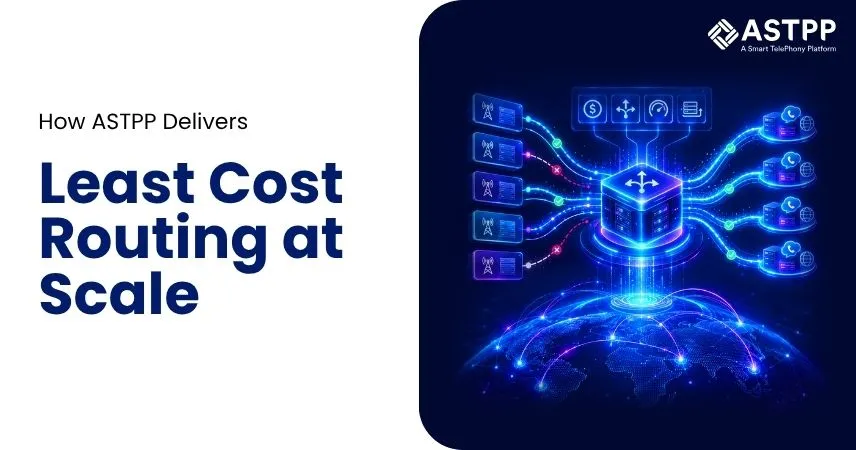
ASTPP is a carrier-grade VoIP billing and softswitch platform that combines Class 4 and Class 5 switching with real-time billing. Its ASTPP least cost routing engine supports the same routing requirements discussed above without relying on a separate rate-comparison tool.
- Centralized carrier rate management:Manage carrier rates in one place and apply updates to live routing decisions without manually reloading the system.
- Configurable routing rules:Combine cost with quality thresholds, carrier priority levels, and minimum margin requirements for each destination.
- Automated failover:Route calls to alternate carriers automatically when a primary route fails. This is built into the Class 4 Softswitch
- CDR-linked billing:Connect routing and billing data so providers can track routing decisions and margins using the same real-time data.
- Multi-tenant and multi-level reseller support:Wholesale carriers can manage their own resellers and apply consistent routing rules across different tenants.
- Flexible deployment:Deploy ASTPP in cloud, on-premises, or HA cluster environments based on production requirements.
Because ASTPP combines the softswitch and billing layers, rate changes, routing rules, and margin reports can use the same underlying data. This makes LCR part of the daily wholesale operation instead of just another feature in the platform.
Real Use Cases
Wholesale VoIP providers can use this setup in different ways depending on their business and position in the value chain:
- Wholesale VoIP carrier with 60+ interconnects:Uses percentage-based load balancing and margin-floor routing rules to maintain more stable per-minute margins as carrier rates change.
- SIP trunking provider entering new international markets:Tests new routes in stages before sending retail-sensitive traffic through a new carrier interconnect. This helps maintain call quality while taking advantage of lower costs.
- Call termination business facing margin pressure:Updates its Class 4 Softswitch routing rules to set a minimum margin for each destination. The system can then route calls away from carriers that no longer meet the required margin.
Conclusion
A least cost routing VoIP setup is not something a wholesale carrier turns on once and forgets. It is an ongoing system that uses centralized rate data, clear routing rules, quality-based failover, and regular updates. All this runs inside a Class 4 Softswitch that can adapt to changes in carrier rates and traffic patterns.
When providers manage LCR as an ongoing process, they can better protect their margins as carrier rates change and competition increases. Integrated VoIP billing software can further support this process by managing rates, billing, carrier costs, and usage data alongside LCR operations.
Book a Demo to see how ASTPP’s least cost routing engine helps protect wholesale margins at scale. Or Talk to Our Experts to get expert help configuring LCR rules for your carrier mix.


