 Introducing iCallify Built by ASTPP’s Engineering Team to Power Modern Contact Centers

Quick Summary: Every Internet Telephony Service Provider (ITSP) and VoIP business—whether a burgeoning startup or an established telecom player—faces the stark reality of SIP attacks. These threats aren’t just technical headaches; they have the power to inflict severe financial damage, disrupt customer trust, and, in the worst cases, sink a business entirely. But fear, uncertainty, or wishful […]
Every Internet Telephony Service Provider (ITSP) and VoIP business—whether a burgeoning startup or an established telecom player—faces the stark reality of SIP attacks. These threats aren’t just technical headaches; they have the power to inflict severe financial damage, disrupt customer trust, and, in the worst cases, sink a business entirely. But fear, uncertainty, or wishful thinking won’t offer protection. The real solution lies in understanding the nature of common SIP attacks and arming yourself with the right defense strategies.
Relying solely on hope or manual monitoring won’t shield your systems. What’s needed is a proactive defense strategy—starting with the right technology stack. Using a secure and intelligent VoIP billing software adds an essential layer of protection, helping you track, detect, and respond to unusual activities in real-time.
Let’s break down the three most prevalent SIP attacks every VoIP entrepreneur must recognize, and share actionable solutions to shield your operations, revenue, and reputation.
Major SIP Attacks Frequently Encountered by Many VoIP Businesses
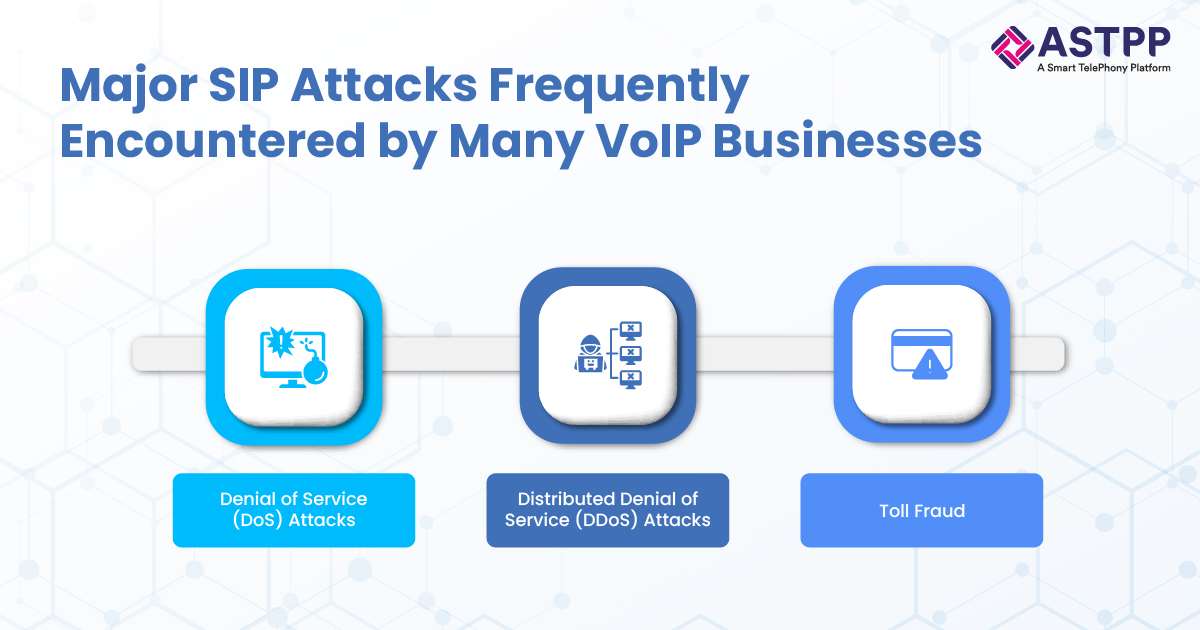
1. Denial of Service (DoS) Attacks
DoS attacks are among the most frequent threats targeting SIP-based systems such as Class 4 Softswitches. In a DoS attack, perpetrators flood your network with a massive amount of illegitimate SIP traffic, overwhelming system resources and infrastructure.
Why is it dangerous?
- Resource Depletion: Within minutes, your servers may become exhausted, unable to serve legitimate customers while incurring mounting carrier and system expenses.
- Business Interruption: Genuine users experience service outages, resulting in frustrated clients and potential loss of business.
- Stealth: Tracing the source can be nearly impossible, especially if signaling and data channels aren’t properly segregated.
- Financial Loss: Rapid consumption of resources due to attack traffic can lead to devastating costs—even before you detect the breach.
Your customers expect reliability. Don’t let attackers dictate your business outcomes.
2. Distributed Denial of Service (DDoS) Attacks
DDoS attacks are an escalated form of DoS assaults. Instead of a single source, the attacker employs a network of compromised devices (often called a botnet) to unleash a tsunami of malicious SIP traffic at your network, PBX, or infrastructure.
Why is it especially dangerous?
- Large Scale Disruption: Diverse, geographically-distributed bots make it harder to block or trace the attack source.
- Layered Attacks: DDoS campaigns can target any layer of your network stack, fully crippling service delivery.
- Brand Reputation at Stake: Extended downtime leads to eroded customer trust and market credibility, far beyond the immediate technical harm.
- Costly Recovery: The operational, technical, and financial aftermath is harder to manage and recover from than single-source DoS attacks.
Prevention is always less expensive than reaction—especially with DDoS.
3. Toll Fraud (a.k.a. Time Theft or Dial-Through Fraud)
Toll fraud is one of the stealthiest danger zones in the VoIP landscape. Attackers exploit the weakest link in your VoIP ecosystem to secretly resell your valuable resources—whether it’s phone lines, DID numbers, or calling card minutes.
Everything You Need to Know About SIP Attacks Awaits!
Why is it so insidious?
- Under-the-Radar: Fraudsters mimic real customer behavior, making unauthorized transactions nearly invisible until financial loss is already significant.
- Profit Drain: Attackers profit by selling your resources, while you absorb the operational costs and lost revenue.
- Delayed Detection: This form of fraud often continues for extended periods undetected, magnifying the damage.
- Remember: It’s your business footing the bill while others cash in on your assets.
How Can You Protect Your VoIP Business?
Manual Monitoring: A Risky, Outdated Defense
Many providers rely on admin teams to review live stats and traffic logs to spot unusual activity. While diligence helps, this method is reactive, time-consuming, and ineffective against fast-evolving or subtle attacks. By the time a SIP attack or fraud is detected, the damage may already be done.
Automated Fraud Detection: Your Smartest Defense
The most reliable way to fight SIP attacks is with an advanced, automated fraud detection platform:
- Real-Time Detection: Instantly identifies and responds to suspicious activity—before threats escalate.
- Immediate Alerts: Notifies administrators and technical teams the moment something unusual is spotted.
- Automatic Mitigation: Proactively blocks fraudulent or attack traffic, minimizing service disruption and financial loss.
- Customizable Rules: Allows you to tailor monitoring and response to your specific risk profile, business volume, and customer needs.
- Peace of Mind: You focus on growing your business, while the system relentlessly guards your infrastructure 24/7.
ASTPP: Advanced Protection for Modern VoIP Providers
ASTPP, the leading smart telephony platform, understands the stakes. That’s why our VoIP solutions and add-ons include a state-of-the-art fraud detection system—engineered to keep your business safe from SIP attacks, toll fraud, and more. With ASTPP, you can count on robust, automated protection tailored to the realities of today’s telecom landscape.
Don’t leave your business exposed. Contact us for a free demo and trial see how ASTPP keeps your VoIP operations secure, reliable, and ready for growth.


