 Introducing iCallify Built by ASTPP’s Engineering Team to Power Modern Contact Centers
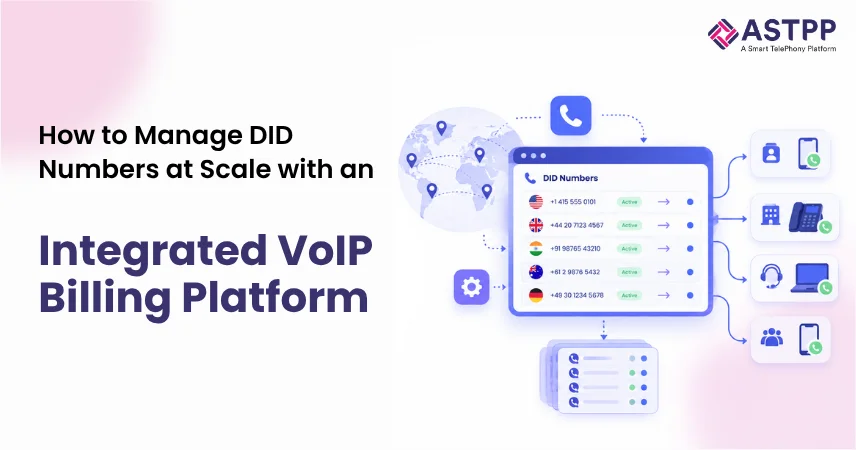
Quick Summary: Discover how an integrated VoIP billing platform simplifies DID number management, streamlines provisioning and billing, improves compliance, and helps wholesale carriers, ITSPs, and SIP trunking providers manage numbers efficiently at scale.
A telecom operator managing a few hundred DID numbers can get by with a spreadsheet and a few manual steps. But when you are managing fifty thousand DIDs across a dozen countries, things get much more complicated. This is where a DID management platform integrated with VoIP Billing Software can make a real difference. Every additional thousand numbers means more provisioning requests, billing cycles, compliance checks, and more opportunities for issues to go unnoticed. At this scale, DID management is no longer just an administrative task. It becomes a real operational risk.
This is where most standalone number-management tools start to fall short. They can provision a DID, but they usually cannot tell you if that DID is profitable, billed correctly, or still compliant with a country’s KYC rules six months later. This gap is why more wholesale carriers, ITSPs, and SIP trunking providers are bringing DID management into their Wholesale VoIP Billing Platform instead of relying on a separate bolt-on tool. A DID management platform that works with your VoIP Billing Software can eliminate the manual reconciliation between two systems that were never built to work together.
This article explains what can go wrong when DID management is handled manually, what a modern DID provisioning platform should include, and how an integrated VoIP billing platform like ASTPP can manage the complete DID lifecycle for operators handling numbers at scale.
What Is DID Management, and Why Does It Get Harder at Scale?

A Direct Inward Dialing (DID) number is a phone number an operator purchases from a provider and assigns to a customer, reseller, or internal service. It allows inbound calls to reach a specific destination without the need for a dedicated physical line. Direct inward dialing management covers everything that happens to the number after it is purchased, including assignment, routing configuration, billing, renewal, KYC verification, and eventually releasing the number back into the pool.
When you have a small number of DIDs, managing them can be as simple as following a checklist. But as the number of DIDs grows, things become much more complicated. A wholesale carrier managing 100,000-plus DIDs across 40 countries is essentially handling an inventory system, billing system, compliance system, and routing engine at the same time. All these systems need to stay in sync.
For example, if the billing system shows a DID as active while the routing system has already released it, the customer could be charged for a number that no longer works. If KYC information is stored in a separate spreadsheet, an unverified DID could be assigned by mistake, creating a potential regulatory issue.
This is why a DID number management solution built directly into the billing platform makes more sense than using a separate tool alongside it. Keeping DID inventory, billing, routing, and compliance connected helps operators reduce manual work, avoid costly errors, and manage numbers more reliably as they scale.
Where Manual DID Management Breaks Down
Most operators do not plan to build a full DID management platform from day one. They usually start with spreadsheets and manual processes, then gradually grow into a problem as their DID inventory increases. The most common failure points are:
- Provisioning delays:Assigning DIDs one at a time to resellers and customers slows down onboarding, especially during bulk account migrations.
- Billing mismatches:DIDs may continue to be billed after they are released, or they may not be billed at all after assignment. Both situations can lead to revenue leakage that may not be noticed for months.
- KYC gaps:Country-specific identity verification requirements are often tracked outside the main system. This creates compliance risks that can remain unnoticed until an audit or regulatory review.
- Orphaned numbers:When a customer releases a DID, the number can sit unused because no one flags it for reassignment. This ties up inventory that could otherwise generate revenue.
- Reseller visibility gaps:Multi-tier operators can lose track of which DIDs are assigned to each reseller and which end customer a reseller has assigned them to.
- Routing drift:DID routing destinations can be changed manually without proper documentation. When a call is misrouted, troubleshooting becomes a guessing game.
None of these problems are unusual. They are common results of manual, spreadsheet driven DID management once the number of records grows beyond a few thousand. As the business scales, keeping everything accurate across provisioning, billing, KYC, inventory, and routing becomes increasingly difficult without an integrated system.
The Business Impact of Getting DID Management Wrong

The problems mentioned above are not just operational headaches. Each one can have a direct impact on revenue, costs, and compliance.
Unbilled or under-billed DIDs mean recurring revenue that an operator never collects. Idle inventory ties up money in numbers that generate nothing until someone notices them and reassigns them. KYC compliance gaps can lead to fines or, in stricter markets, even the loss of numbering rights. Reseller disputes over DID ownership or billing responsibility also take up valuable support time that could otherwise be spent growing customer accounts.
For a wholesale carrier or ITSP operating on thin margins, DID revenue can easily be overlooked because each individual amount seems small. But even a $2–$5 monthly billing error adds up quickly. Across 10,000 DIDs, that small error can turn into $20,000–$50,000 in missed revenue every month.
At scale, DID management is not just about keeping numbers organized. It directly affects revenue, inventory utilization, compliance, and the overall efficiency of the business.
What to Look For in a DID Provisioning Platform
An operator-grade DID provisioning platform needs to do more than handle the initial number purchase. It should support the complete DID lifecycle and make it easy to manage large volumes of numbers. At a minimum, look for features such as:
- Bulk DID management:Purchase, assign, update, or release large batches of numbers in a single operation instead of managing each DID individually.
- Reseller-tier assignment:Allow admins to allocate DID blocks to resellers, who can then distribute individual numbers to their customers, while maintaining visibility at every level.
- Conditional and stick routing:Set a default routing destination when a DID is purchased and consistently route calls from a specific caller ID to a fixed destination. Ideally, this should also work with your least cost routing engine.
- DID billing automation:Support one-time and recurring billing cycles for each DID. The platform should also automatically release numbers when customers do not renew, so unpaid DIDs do not remain active indefinitely.
- Country-specific KYC enforcement:Apply identity verification requirements based on the country where the DID is being purchased or assigned. KYC status should be tracked within the same system as the number.
- Call forwarding and failover:Forward DID calls to PSTN or SIP destinations based on conditions such as always, busy, no answer, or not registered. A configurable failover destination should also be available based on the call disposition.
- Vanity number mapping:Map recognizable or memorable numbers to existing DIDs without requiring a separate provisioning step.
- Local number and community DID sharing:Allow a single DID to be shared across multiple customers while still providing each customer with exclusive service. This can help reduce the DID cost per customer.
A platform that provides all these capabilities as native functionality, rather than relying on third-party plugins added to the billing engine, is what most operators need from a DID number management solution. When DID provisioning, routing, billing, and compliance work together in one system, managing numbers at scale becomes much simpler and more reliable.
How ASTPP Handles DID Management Inside a Single VoIP Billing Software Platform

ASTPP treats DID management as a built-in part of its VoIP Billing Software, rather than as a separate tool that needs to be matched with billing and routing data later. This single-platform approach makes VoIP DID management software more practical for carriers and operators managing thousands of numbers, not just small reseller setups.
With ASTPP, operators can manage:
- Centralized DID management:Purchase, assign, and configure DIDs from one admin portal for both wholesale and reseller distribution models.
- Bulk DID management:Purchase, assign, update, or release large groups of numbers in a single operation. This is especially useful during account migrations, large customer onboarding, or other high-volume changes.
- DID billing automation:Run one-time or recurring DID billing through the same billing engine used for voice and SMS. This keeps a DID’s billing status aligned with whether the number is active.
- Country-specific KYC verification:Apply KYC requirements based on the country and prevent unverified customers from purchasing or being assigned DIDs until the required documentation is submitted and approved.
- DID call forwarding and failover:Forward calls to configured destinations and use disposition-based failover when a DID is unreachable or unavailable, helping prevent calls from simply being dropped.
- Custom audio playback:Play a custom message for unassigned DIDs instead of leaving callers with silence when no active destination is configured.
- DID reseller assignment:Support multi-tier DID distribution through the same multi-tenant VoIP billing Admins can track which reseller has which numbers and how those numbers are assigned and billed downstream.
The main advantage is that DID information does not sit in isolation. It works alongside CDR management, rate plans, invoicing, routing, and other billing data within the same platform. Operators can therefore get a clearer view of each DID, including its acquisition cost, billing status, routing configuration, and compliance status, without moving between multiple systems or reconciling separate exports.
For an operator managing thousands of DIDs, that can make a significant difference. Instead of treating DID management as another administrative task, ASTPP DID management brings it into the same workflow used to manage billing, customers, routing, and revenue.
Real Operator Use Cases
- A wholesale carrier onboarding a new reseller with 5,000 DIDs can bulk-assign the entire number block in a single operation instead of processing records individually, reducing onboarding time from days to hours.
- An ITSP entering a market with strict identity-verification requirements can enforce KYC at the point of DID purchase, ensuring that no unverified number reaches a customer and helping protect the operator’s numbering rights in that country.
- A call termination business managing seasonal reseller churn can automatically release unrenewed DIDs back into inventory and flag them for reassignment, preventing numbers from sitting idle and unbilled for months.
Conclusion:
DID management become difficult when your number inventory grows beyond what one person can manage manually. At that point, you can either use a standalone tool and keep billing and routing in separate systems or use a DID management platform that connects everything in one place.
For most wholesale carriers, ITSPs, and SIP trunking providers, Billing Software for ITSPs is a more practical choice. An integrated platform brings provisioning, billing, compliance, and routing information together, making the entire process easier to manage.
ASTPP follows this approach. If your DID inventory has grown beyond your current process, it may be worth exploring what DID lifecycle management looks like when everything is managed through one connected system.


