 Introducing iCallify Built by ASTPP’s Engineering Team to Power Modern Contact Centers

Quick Summary: A modern VoIP billing system should provide accurate rating, real-time charging, automated invoicing, payment management, reporting, and customer controls. This guide highlights essential features telecom operators should consider to improve billing efficiency, reduce revenue leakage, streamline operations, and support growth.
Running a telecom business without a solid billing infrastructure is like running an airline without a reservation system. Calls are made, minutes are used, and invoices are generated, but it’s hard to know where the revenue went. For VoIP solution providers, ITSPs, and wholesale carriers, billing is not just a back-office task. It is the system that determines whether the business makes a profit or loses margin month after month.
The stakes are real, not theoretical. According to the Communications Fraud Control Association (CFCA), the global telecom industry lost an estimated $38.95 billion to fraud in 2023, equal to 2.5% of total telecom revenue. When you also consider routing errors, manual rate mistakes, and reconciliation gaps, the need for a reliable billing infrastructure becomes clear.
This is where VoIP billing system features make a real difference. A platform that only generates invoices is very different from one that protects revenue, supports business growth, and gives operators complete visibility into their operations.
The key difference lies in the features it offers. Below, we look at the essential VoIP billing software features and explain why they matter for telecom operators choosing a new platform or improving their existing one.
What Makes a VoIP Billing System “Modern”
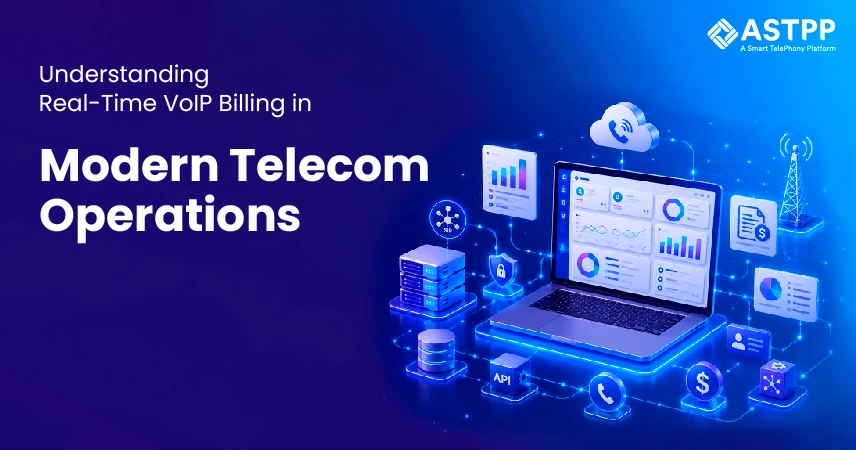
A modern VoIP billing system should support both prepaid and postpaid customers, process thousands of call detail records (CDRs) every second, apply the correct rates to every destination, and detect suspicious activity before it leads to revenue loss. A basic invoicing tool connected to a switch cannot handle these tasks.
The most important VoIP billing system features fall into five key categories: billing accuracy, routing and rate intelligence, multi-tenant scalability, fraud and security controls, and reporting depth. Each category solves a different operational challenge. A platform that performs well in only one or two areas often creates bottlenecks in other parts of the business.
Core Features Every VoIP Billing Software Should Include

At a minimum, every VoIP billing software should include:
- Real-time prepaid and postpaid billing, with mid-call balance deduction to prevent prepaid customers from going into a negative balance.
- Automated invoicing based on usage data with configurable billing cycles (daily, weekly, or monthly).
- Flexible rate management for origination and termination rates, rate decks, and scheduled future rate changes.
- Tax management and multi-currency support for operators serving customers in different regions.
- Partial payment support and configurable daily or monthly credit limits to manage financial risk.
- Multi-level reseller and white-label billing for operators working with partners.
- REST API access for integration with CRM, payment gateways, and internal tools.
- Reporting with summary, country, trunk, and commission views.
These are not advanced or optional features. They are the essential capabilities that separate reliable VoIP billing software from systems that create more manual work than they eliminate.
Carrier-Grade Reliability Matters More Than a Long Feature List
A long feature list may look impressive, but it means little if the platform cannot handle real call volumes. This is where a carrier-grade VoIP billing platform makes the difference. Operators running wholesale or retail VoIP need a system built on Class 4 and Class 5 softswitch architecture, supported by a BSS layer with online charging, and designed to run in a high-availability (HA) cluster across multiple servers.
This is a practical requirement. A well-designed telecom billing system should be capable of supporting large-scale deployments, including the migration of high-availability (HA) clusters handling millions of CDRs and hundreds of thousands of customer accounts with minimal downtime and no data loss. This level of reliability is critical for operators moving production billing environments, and it is far more valuable than simply offering a long list of features.
People Also Read : How to Choose the Best Telecom Billing Software: A Complete Guide
Multi-Tenant Architecture: Built In, Not Bolted On
For operators who sell services through partners, multi-tenancy is essential. A true multi-tenant VoIP billing platform lets admins, resellers, and customers work within the same system while keeping billing, rates, and reporting separate for each account.
Key multi-tenant features include:
- Two reseller models. One where resellers set their own pricing and another based on admin-defined commission.
- Independent payment gateway configuration for each reseller to support a true white-label experience.
- N-level reseller visibility, allowing admins to view the entire partner hierarchy from one portal.
- Reseller-level rate markup and rate group management.
Without these capabilities, a platform may offer separate logins but still have billing processes mixed together behind the scenes.
CDR Processing: Where Billing Accuracy Matters Most
Call detail records (CDRs) are the foundation of every invoice, billing dispute, and audit. A reliable CDR billing system should accurately capture actual vs. billed duration, hang-up cause, caller IP, and provider details, including forwarded calls, where incorrect duration tracking often leads to billing disputes.
Key CDR billing system features include:

- Automated CDR generation with scheduled and exportable reports.
- Accurate handling of free-minute packages so customers are not charged for covered usage.
- A complete audit trail for rate changes and billing adjustments.
- Fast search and advanced filtering across large CDR volumes without performance issues.
When CDR data is inaccurate, it affects more than a single invoice. It can lead to billing disputes, reseller commission errors, and reporting that operators cannot fully trust.
1. Reporting and Analytics
Reporting and analytics are just as important as billing accuracy. Operators need summary reports by trunk, country, and call type, along with automated and scheduled report delivery to avoid manual work. They also need accurate commission reporting that resellers can rely on without manual reconciliation.
A telecom billing system should not only produce accurate data but also make it easy to access and understand. If reports are difficult to use, operators may end up making business decisions based on assumptions instead of reliable data.
2. Fraud Detection: The Feature That Pays for Itself
Telecom fraud is a growing challenge, with the CFCA’s Global Fraud Loss Survey estimating losses of $38.95 billion. Common threats include subscription fraud, account takeover, and PBX fraud. For telecom operators, VoIP fraud detection software is an essential part of protecting revenue.
Key VoIP fraud detection software features include:
- Real-time monitoring of unusual call patterns with configurable alert thresholds.
- Allow and deny lists by prefix, applied per account, to block unauthorized or high-cost destinations.
- A Do Not Call list that blocks outbound calls to specified numbers before they are placed.
- IP-level security controls with separate audit logs for better security management.
- Flexible block actions, including the ability to block suspicious destinations immediately instead of only generating alerts.
Fraud detection is not a one-time setup. Operators should regularly review and adjust fraud rules and alert thresholds to keep up with changing fraud patterns.
People Also Read: Top VoIP Billing Challenges in 2026 and How ASTPP Solves Them
3. Routing Intelligence Still Belongs in the Billing Conversation
For telecom operators, billing and routing are closely connected. They are two sides of the same margin equation. Least Cost Routing (LCR), carrier rate management, and ASR-based quality routing directly impact profitability, not just call handling. A system that manages billing well but treats routing as separate can still lose revenue opportunities.
When evaluating a telecom billing software, operators should check whether routing and billing are integrated in the same platform or rely on separate tools that are connected later.
How to Evaluate the Best VoIP Billing Software for Your Business
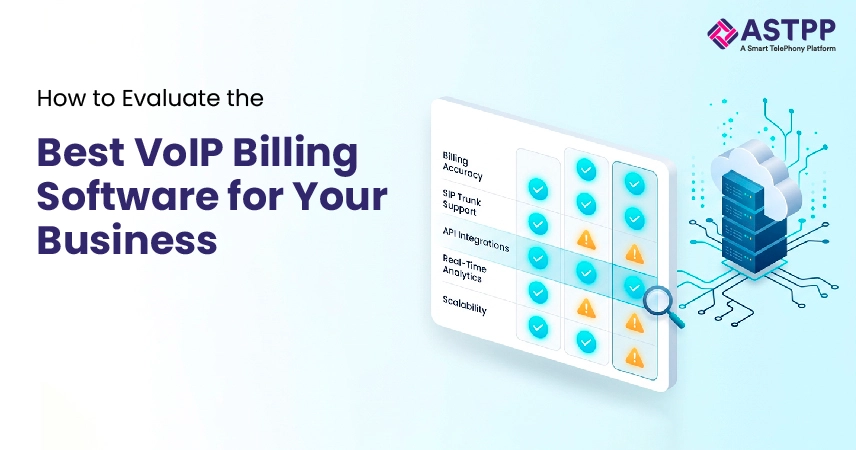
- Does the platform support real-time billing and CDR processing at your actual call volume, not just in a demo environment?
- Can it scale to a multi-tenant reseller model without relying on third-party tools?
- Does it include built-in fraud detection, or do you need to license a separate security product?
- What deployment models are supported: cloud, on-premises, hybrid, or HA cluster?
- Can the vendor customize the platform to match your specific billing model, instead of forcing you to adapt to it?
Operators looking for the best VoIP billing software often begin with feature comparisons, but in real-world use, deployment flexibility and customization usually matter more once the system is running live production traffic.
Where ASTPP Fits into This Picture
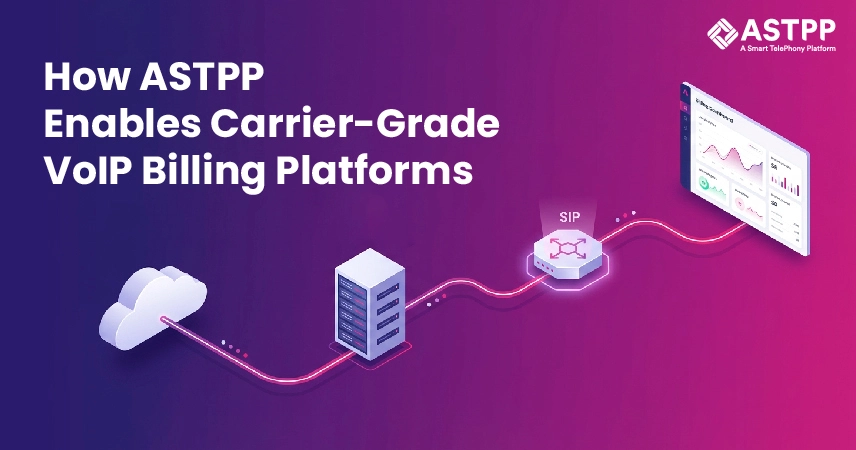
A platform like ASTPP sits in the category of carrier-grade VoIP billing platforms that combine a Class 4/5 softswitch, a BSS layer with real-time OCS (Online Charging System), an LCR engine, and multi-tenant reseller billing within a single system. The goal is to reduce fragmentation, so operators don’t need separate tools for routing, charging, and billing.
Such platforms typically evolve to include capabilities like IP-level security controls, MNP (Mobile Number Portability) lookup for more accurate routing decisions, and dynamic caller ID controls to improve routing flexibility and compliance. The focus is on giving operators more control over routing, billing, and policy enforcement in real time.
Unlike rigid SaaS-only billing tools, a modular architecture allows operators to adapt the system to their business needs. This usually includes support for custom development, deployment across cloud, on-premises, or hybrid environments, and direct access to core platform components. The key idea is flexibility: the billing system should fit the operator’s workflow, not force the operator to reshape their business around the software.
Conclusion:
VoIP Billing software is one of the few core platform decisions for a telecom operator that impacts every part of the business: revenue, customer trust, reseller relationships, and regulatory exposure.
The VoIP billing system features discussed are not optional enhancements. They are the minimum baseline operators should expect before committing to a billing platform that will handle production traffic for years to come.


