 ASTPP v7.3 Launch Webinar – Join Us on Sept 30, 2026

Quick Summary: Choosing the right VoIP billing software requires comparing features, pricing, scalability, automation, integrations, and usability. This guide reviews ten leading VoIP billing platforms in 2026, helping telecom operators evaluate capabilities, pricing approaches, and suitability for different business models and requirements.
Choosing the right VoIP billing software 2026 is a critical decision for telecom operators. Whether you manage a wholesale carrier, multi-tenant SIP trunking service, or a full-stack ITSP, your billing platform directly impacts your revenue and margins. Even small billing errors can create major losses at carrier scale.
According to a report, the global VoIP market is projected to grow from $195.39 billion in 2026 to $388.97 billion by 2034, at a CAGR of 10.4%. As the market grows, more operators are entering the space, carriers are handling more complex routing, and reliable billing platforms are becoming more important.
This guide covers the top VoIP billing platforms to evaluate, including their features, pricing models, and the right fit for different business needs.
What to Look for in a VoIP Billing Platform

Before choosing a VoIP billing platform, it is important to understand the features that make a system reliable for real-world telecom operations:
- Real-time billing engine: Prepaid balances should update during calls. Delayed billing can lead to revenue loss.
- LCR (Least Cost Routing): Helps select the most cost-effective carrier for each call and improves profit margins.
- Multi-tenant architecture: Essential for businesses that support resellers or multiple customer accounts.
- CDR accuracy: Accurate Call Detail Records are important for billing transparency and resolving disputes.
- Deployment flexibility: Cloud, on-premises, and hybrid options provide better control over operations.
- API access: Easy integration with CRM, payment gateways, and provisioning systems helps automate workflows.
Overall, a strong VoIP billing platform should provide accurate billing, flexible routing, and the scalability needed to support growing telecom operations.
Top 10 VoIP Billing Software in 2026
1. ASTPP: The Best Open-Source VoIP Billing Platform for Operators
ASTPP is an open-source VoIP billing platform designed for telecom operators, combining billing, routing, and softswitch capabilities in one solution. It supports both Class 4 and Class 5 operations with built-in BSS and Online Charging System (OCS) features.
For businesses looking for the best VoIP billing software 2026, ASTPP provides flexibility without vendor lock-in and helps operators manage billing, routing, and telecom operations from a single platform.
Key Features:
- Real-time prepaid and postpaid billing with OCS
- LCR engine with multiple routing strategies
- Multi-level reseller billing with white-label portals
- DID management, CDR processing, and MNP Lookup
- Fraud detection, IP Security Module, and STIR/SHAKEN support
- Flexible deployment options, including single-node, HA cluster, and geographic redundancy
- REST API integrations with CRM, payment, and business tools
Pricing:
Available on request. Pricing depends on deployment requirements and customization needs.
Best For:
Wholesale VoIP carriers, ITSPs, SIP trunking providers, and telecom operators looking for a flexible, carrier-grade VoIP billing platform without vendor dependency.
Also Explore: Top VoIP Billing Challenges in 2026 and How ASTPP Solves Them
2. PortaOne (PortaSwitch): Enterprise Telecom Billing
PortaOne is considered one of the well-known platforms in telecom billing. The solution incorporates billing together with Class 4 and Class 5 softswitches and is focused on large telecom carriers and wholesalers.
Key features:
- Built-in VoIP billing and softswitch
- Class 4 and Class 5 softswitch support
- Multitenant architecture
- Advanced routing and rate management
- API-based integration support
Where it falls short:
- Licensing costs are high, placing it out of reach for many mid-market operators
- Deployment is complex and demands significant technical resources upfront
- Customization is limited compared to open-source alternatives
Pricing:
Enterprise licensing approach. Full deployments typically involve six-figure annual costs.
Best for:
Large telecom carriers with significant capital budgets and in-house technical teams.
3. Kolmisoft MOR: VoIP Billing for Smaller Operators
Kolmisoft MOR is a VoIP billing platform designed for small and mid-size operators. It provides essential billing and routing features but may have limitations as businesses grow and handle higher traffic volumes.
Key Features:
- VoIP billing and rate management
- Softswitch integration
- Wholesale billing support
- Basic reporting and CDR access
Where it falls short:
- Limited customization due to its SaaS-focused approach
- Less suitable for complex multi-tenant environments
- Fewer integration options compared to larger operator-grade platforms
Pricing:
License-based pricing with ongoing subscription costs.
Best For:
Small to mid-size VoIP providers with simple billing needs and standard operational requirements.
4. VoIPSwitch: Integrated Billing and Switching
VoIPSwitch is an integrated VoIP billing and softswitch platform used by telecom operators. It provides basic billing, routing, and reseller management features but has limitations compared to modern platforms.
Key Features:
- Integrated billing and switching
- Rate management and DID management
- Reseller support
- Basic fraud controls
Where it falls short:
- Older interface compared to newer platforms
- Limited scalability for high-volume operators
- Restricted customization options
Pricing:
License-based pricing. Contact the vendor for details.
Best For:
Operators looking for a traditional all-in-one VoIP billing platform with standard requirements.
5. MagnusBilling: Open-Source VoIP Billing for Developers
MagnusBilling is an open-source VoIP billing platform built on Asterisk. It is suitable for developers who want a customizable billing solution based on an existing codebase.
Key Features:
- Asterisk-based billing engine
- Call rate management
- Open-source codebase
- Basic reporting
Where it falls short:
- More developer-focused than operator-focused
- Limited enterprise support
- Not designed for carrier-scale deployments
- Basic multi-tenant capabilities
Pricing:
Free to download. Support and customization may require additional costs.
Best For:
Developers building custom VoIP billing solutions from a flexible codebase.
6. JeraSoft: Carrier Billing with Strong Reporting
JeraSoft is a VoIP billing platform designed for wholesale carriers and ITSPs. It focuses on billing accuracy, rating, and detailed reporting.
Key Features:
- Wholesale VoIP billing and rate management
- LCR routing engine
- CDR management and reporting
- Multi-tenant billing support
- Rate import and management tools
Where it falls short:
- Less flexible than open-source platforms
- Limited deployment options
- Requires time to learn the interface
Pricing:
Subscription-based pricing. Contact the vendor for details.
Best For:
Wholesale carriers and ITSPs that need strong analytics and reporting.
7. Cerillion: Enterprise BSS/OSS
Cerillion is an enterprise telecom billing and BSS/OSS platform built for large telecom companies and ISPs. It is not specifically focused on VoIP operators or SIP-based businesses.
Key Features:
- Telecom billing and charging
- CRM and order management
- Revenue management
- Customer lifecycle management
Where it falls short:
- Not designed specifically for VoIP operators
- High implementation complexity and cost
- Too advanced for many SIP trunking businesses
Pricing:
Enterprise pricing model. Contact the vendor for implementation costs.
Best For:
Large telecom operators with complex BSS/OSS requirements.
8. Telinta: Cloud-Based VoIP Billing and Switching
Telinta is a cloud-based VoIP billing and switching platform that provides a hosted solution for VoIP providers.
Key Features:
- Cloud-hosted billing and switching
- White-label reseller support
- DID management and calling card support
- Multi-tenant architecture
Where it falls short:
Limited control due to hosted deployment
Less customization flexibility
Ongoing cloud costs
Pricing:
Monthly subscription model based on usage and requirements.
Best For:
VoIP providers looking for a managed platform without handling infrastructure.
9. Sipwise: Open-Source Softswitch with Billing
Sipwise is an open-source softswitch based on Kamailio, designed for telecom teams that prefer flexible, technical deployments.
Key Features:
- Open-source softswitch platform
- SIP-based routing
- Billing module and API access
- High availability support
Where it falls short:
- Requires strong technical expertise
- Billing features are less advanced than dedicated billing platforms
- Smaller support ecosystem
Pricing:
Open-source with commercial support options.
Best For:
Technical telecom teams managing open-source infrastructure.
10. 2600Hz (KAZOO): API-Driven VoIP Infrastructure
2600Hz KAZOO is an API-driven VoIP platform designed for companies building communication solutions with flexible development options.
Key Features:
- API-driven VoIP platform
- Multi-tenant support
- Open-source codebase
- Developer-focused ecosystem
Where it falls short:
- Not a dedicated VoIP billing platform
- Requires development effort for billing workflows
- Not ideal for operators needing ready-to-use billing and routing
Pricing:
Open-source with commercial support options.
Best For:
Development teams building custom communication platforms with an API-first approach.
VoIP Billing Software Comparison: Key Metrics at a Glance
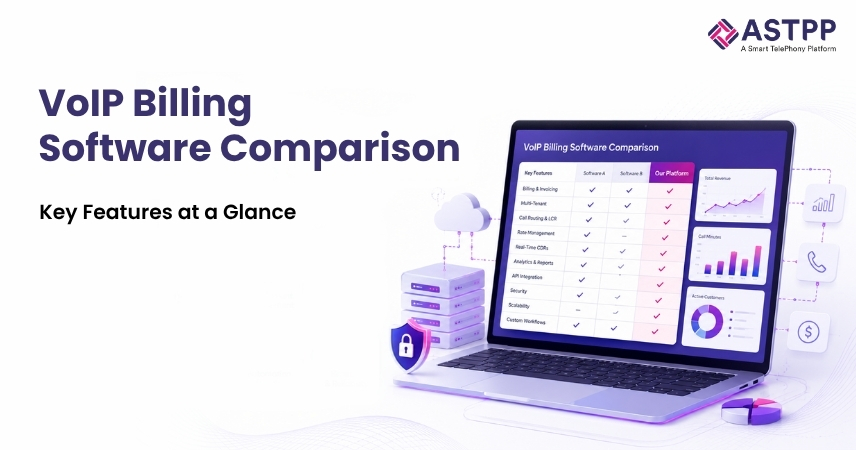
The table below compares the top VoIP billing platforms based on the key factors that matter most to telecom operators, including features, flexibility, scalability, deployment options, and suitability for different business needs.
| Platform | Type | Open Source | Multi-Tenant | LCR Engine | Pricing Model |
| ASTPP | Billing + Softswitch | Yes | Yes
|
Yes
|
Per deployment |
| PortaOne | Billing + Softswitch | No | Yes | Yes | Enterprise license |
| Kolmisoft MOR | Billing | No | Limited | Yes
|
License |
| VoIPSwitch | Billing + Softswitch | No | Yes | Yes | License |
| MagnusBilling | Billing | Yes | Limited | Basic | Free/Open Source |
| JeraSoft | Billing | No | Yes | Yes | Subscription |
| Cerillion | BSS/OSS | No | Yes | No | Enterprise |
| Telinta | Billing + Softswitch | No | Yes | Yes | Subscription |
| Sipwise | Softswitch | Yes | Yes | Yes | Open Source + Support |
| 2600Hz KAZOO | Infrastructure | Yes | Yes | No | Open Source + Support |
The Business Case for an Open-Source VoIP Billing Platform in 2026
The move toward an open-source VoIP billing platform is not just about technology. It is about improving margins and having more control over your infrastructure.
As the VoIP market continues to grow, more operators are entering the space, increasing competition and putting pressure on per-minute margins. According to a report, the VoIP services market will grow from $167.27 billion in 2025 to $185.34 billion in 2026, reaching $280.72 billion by 2030 at a CAGR of 10.8%.
An open-source VoIP billing platform helps reduce dependency on licensing models and gives operators more control over customization, scaling, and long-term costs. Instead of continuously paying platform fees as the business grows, operators can invest in their own infrastructure.
The decision is not only about features. It is about choosing a business model that supports growth, flexibility, and better cost control.
VoIP Billing Software Pricing: What Operators Should Actually Expect
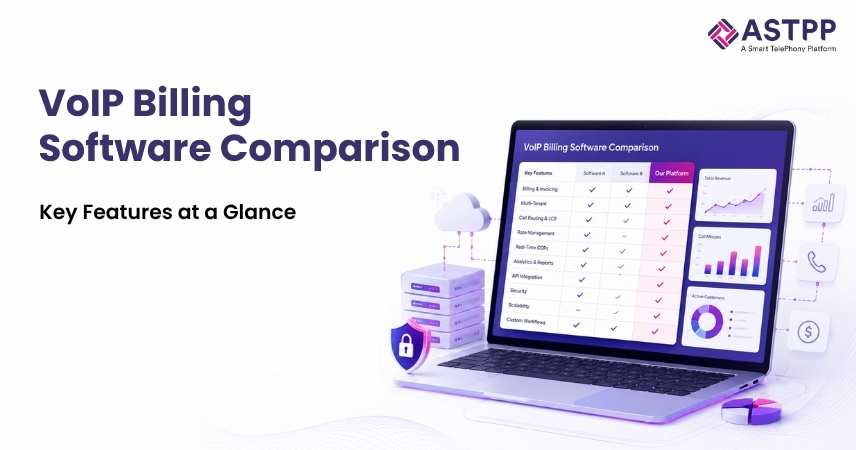
VoIP billing software pricing can vary significantly depending on the vendor and pricing model. Operators usually encounter these common options:
- Per-seat licensing: Common in UCaaS platforms but less suitable for wholesale operators where usage is based on traffic volume, not users.
- Per-minute or per-CDR pricing: Charges based on call usage and can become expensive as traffic grows.
- Annual license fees: Provide predictable costs but can be expensive for enterprise platforms.
- Deployment-based pricing: Costs are based on deployment and customization needs rather than traffic volume, making it more scalable for growing operators.
- Open-source with support: Allows operators to deploy the platform freely while paying for support, updates, or customization when needed.
For a wholesale VoIP billing solution, deployment-based and open-source models often provide better long-term cost control, especially as call volumes increase.
Why ASTPP Stands Out as the Best VoIP Billing Software in 2026

When comparing the top VoIP billing software, ASTPP stands out as a complete open-source solution for telecom operators. It combines Class 4/Class 5 softswitch capabilities, BSS with real-time OCS, LCR routing, and multi-level reseller billing in one platform.
ASTPP helps operators manage billing, routing, and switching without depending on multiple separate systems. Features like real-time charging, flexible routing, and multi-tenant billing make it easier to control operations and scale efficiently.
For operators looking for the best VoIP billing software 2026, ASTPP offers a balance of carrier-grade features, scalability, and cost control.
Final Verdict: Which Platform Is Right for You?

The right VoIP billing platform depends on your business requirements, operational model, and future growth plans.
- For new VoIP businesses: Choose a platform that offers essential billing, routing, and management features while allowing room to scale.
- For wholesale carriers: Focus on solutions with strong CDR management, real-time billing, and advanced routing capabilities.
- For businesses comparing enterprise platforms: Evaluate flexibility, customization options, deployment models, and total cost of ownership.
- For open-source VoIP billing needs: Consider platforms that provide control, customization, and the ability to adapt as your business grows.
- For hosted SIP billing requirements: Cloud-based solutions can provide faster deployment and easier management with less infrastructure responsibility.
The best VoIP billing software 2026 should align with your business goals, support future growth, and provide the right balance of scalability, control, and operational efficiency.


