 ASTPP v7.3 Launch Webinar – Join Us on Sept 30, 2026
Quick Summary: Real-time BSS and online charging help telecom operators manage usage, balances, charging, and revenue more efficiently. This guide explains why these capabilities matter in 2026, highlighting how real-time systems improve billing accuracy, customer control, operational efficiency, and business growth sustainably.
The telecom industry is growing at a rapid pace, driven by 5G rollout, IoT expansion, and surging demand for VoIP services. Yet, this boom brings massive complexity. Traditional billing systems struggle with real-time data volumes, leading to revenue leaks, delayed payments, and unsatisfactory customers. The solution? A robust bss in telecom with real-time online charging. These solutions streamline operations, enable instant monetization, and future-proof your network.
In 2026, as services diversify into cloud PBX and AI-driven communications, operators without this tech risk falling behind. Read the blog to discover why a complete BSS has become essential for today’s telecom operators, seeking to thrive amid digital disruption.
What is a Telecom BSS System?
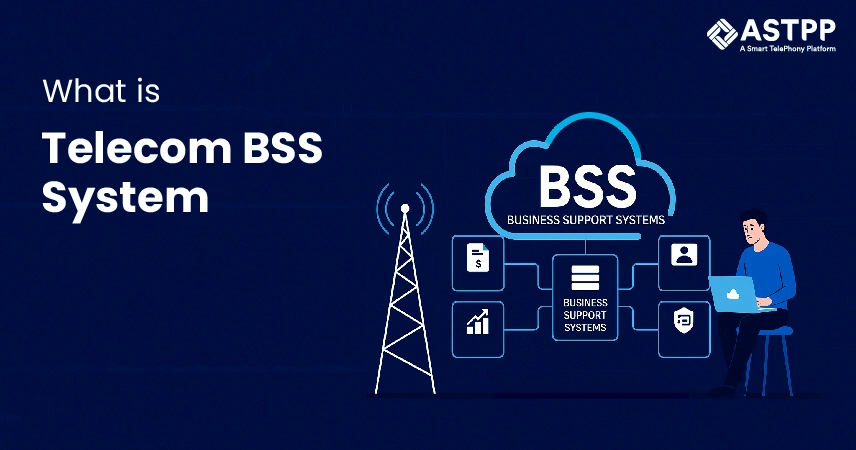
A telecom BSS system or Business Support System is the platform that powers a telecom operator’s commercial operations, making complex services simple to manage.
At its core, a telecom BSS platform includes:
- Billing for accurate usage charges
- CRM for customer insights, and
- Order management for seamless service fulfilment.
Together, these digital BSS solutions handle everything from subscription tracking to revenue assurance in telecom billing and BSS workflows.
For telecom operators, it means ditching spreadsheets for automated, scalable tools that boost efficiency, reduce errors, and enhance overall customer satisfaction. Thereby, turning raw network data into profitable business intelligence.
What is a Real-Time Online Charging System?
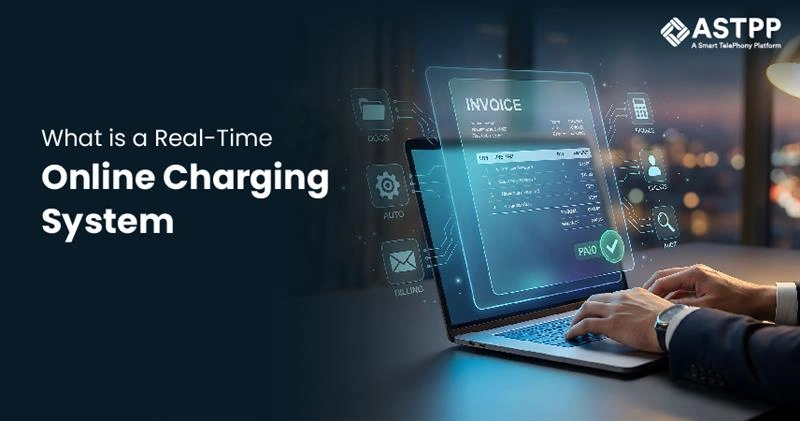
A real-time charging system (OCS) deducts usage costs instantly from a customer’s balance during a session, unlike traditional postpaid billing that waits for cycle-end invoices.
In an online charging system telecom setup, calls, data, or VoIP sessions trigger immediate checks against prepaid wallets or credit limits via real-time charging telecom protocols.
This is crucial for prepaid users who dominate emerging markets and modern pay-per-use services like streaming or gaming. No more bill shocks or revenue shortfalls; it’s proactive control that keeps services flowing without interruptions.
Why Telecom Operators Need BSS in 2026
By 2026, telecom operators will juggle exploding services like VoIP dialers, cloud UCaaS, and edge AI bots, making why telecom operators need BSS crystal clear: survival demands agility.
Legacy systems cause revenue leakage from unmonetized usage, while manual processes can’t scale against 50%+ data traffic growth. On the other hand, a robust telecom monetization platform via BSS system for telecom operators 2026 automates everything from dynamic pricing to fraud detection.
It ensures telecom revenue management system precision amid 5G/6G shifts, multi-cloud integrations, and regulatory pressures. Operators embracing this now will capture new streams like IoT billing, outpacing competitors stuck in silos.
Key Benefits of Real-Time Charging Systems

Real-time online charging system delivers game-changing benefits that telecom operations can’t ignore.
- Instant billing updates: Stop overspending before it happens and dramatically cut bad debt. By deducting costs instantly when a call, data session, or SMS is used, operators avoid the messy “bill shock” that used to drive customers away. This real-time link between usage and payment means accounts stay healthy, cash flow stays steady, and finance teams spend less time chasing overdue payments and more time on growth.
- Full transparency for customers: Real-time balance alerts build trust and loyalty by keeping subscribers happy and in the loop. It’s like a friendly reminder: “You’ve used 80% of your minutes, top up now to keep calling!” This turns billing from a scary monthly surprise into an ongoing, honest conversation. Customers feel in control, stick around longer, and see the operator as a helpful partner, not just a faceless biller.
- Flexible pricing models: Launch time-of-day rates or custom bundles that feel tailor-made, opening smarter upsell chances and extra revenue. Want to offer “night owl” data packs for gamers? Or discounted international VoIP calls during off-peak hours for busy call centers? Real-time charging lets you create and launch these micro-plans in hours, not months. The result? Subscribers get offers that match their lifestyle, and operators tap into revenue streams that rigid, month-end systems could never support.
Role of VoIP Billing Software in Telecom
VoIP billing software acts as the robust engine within a telecom BSS system, seamlessly handling rating, charging, and invoicing for voice-over-IP traffic.
It processes complex tariffs like per-minute rates, destination-based fees, or concurrent call limits in real time, integrating with softswitches for accurate mediation. This ensures every VoIP session, from wholesale trunks to retail calls, generates accurate revenue records.
When combined with BSS, it supports multi-currency settlements and usage analytics, empowering operators to monetize VoIP growth without hassle. Overall, it’s the reliable bridge between network activity and business profitability.
Importance of Class 4 Softswitch
Class 4 softswitch is vital for telecom carriers managing high-volume wholesale voice traffic. It excels at intelligent routing, load balancing, and protocol conversion (like SIP to SS7) across global networks, ensuring least-cost routes for bulk calls.
When integrated with BSS billing, it captures CDRs for real-time settlements and interconnect billing, minimizing disputes.
In 2026’s interconnected world, Class 4 handles VoIP peering, fraud prevention, and scalability for terabit-scale traffic. That’s why they’ve become essential for operators who want to squeeze more margin out of wholesale deals while keeping their networks rock-solid reliable.
Role of Class 5 Softswitch
The Class 5 softswitch powers end-user services, delivering features like call forwarding, IVR, voicemail, and SIP trunking for residential or business lines.
It manages subscriber sessions at the access edge, authenticating users and enforcing policies like concurrent call limits. When it’s properly linked to billing systems, it enables real-time rating for features like video calls or presence services.
For modern telecom, Class 5 softswitches scale how you deliver services to each customer, smooth the path to UCaaS migrations, and feed usage data straight into your BSS. The result? Personalized, revenue-ready experiences that don’t put extra strain on the network.
Multi-Tenant IP PBX in Modern Telecom
A multi-tenant IP PBX revolutionizes business communications by hosting multiple virtual PBX instances on shared infrastructure. Ideal for SMBs and enterprises, it offers tenants isolated features like extensions, queues, conferencing, and mobility apps, all via cloud or on-prem.
Usage tracking, down to every call and minute per tenant, flows straight into billing systems, thereby ensuring spot-on invoicing. Moreover, it lowers costs by pooling resources, while also enabling white-label reselling and integrating seamlessly with CRM for unified communications. As a result, it stands as a scalable backbone for operators serving a mix of diverse clients.
BSS vs OSS: Key Differences

Wondering the difference between BSS and OSS? Here is the simple breakdown:
| Aspect | BSS (Business Support Systems) | OSS (Operations Support Systems) |
| Primary Focus | Business & revenue operations | Network & technical operations |
| Key Tools | Billing, order management, CRM | Inventory management, fault & performance monitoring |
| Core Goal | Monetization (drive profits) | Reliability (keep services alive) |
| What It Handles | Customer interactions, payments, plans | Network provisioning, outages, quality of service |
BSS drives profits; on the other hand, OSS keeps services running. Both are essential for holistic telecom success. In 2026’s digital-first landscape, they no longer work in silos, modern operators fuse them into a unified BSS/OSS core to deliver instant billing, real-time network self-healing, and seamless UCaaS experiences.
How to Choose the Right BSS Solution

Selecting a telecom revenue management system starts with the following steps:
- Start by ensuring the solution can scale to handle a large volume of data floods without any downtime.
- Prioritize seamless integration with VoIP softswitches, CRM platforms like Salesforce, and OSS for end-to-end automation.
- Make sure it offers deep customization, including support for dynamic pricing and multi-tenant setups.
- Look for 24/7 SLAs, a proven 99.99% uptime record, and easy migration paths.
- Check for built-in compliance and real-time analytics to guarantee revenue assurance.
- Finally, run a proof-of-concept (PoC) test to confirm the system aligns with your long-term growth roadmap.
Conclusion
In 2026 and beyond, a complete telecom BSS system with real-time online charging system isn’t a luxury, it’s your edge against revenue leaks, stiff competition, and tech evolution. From VoIP billing to softswitches, it unifies operations for scalable monetization.
Ready to future-proof? Explore our BSS solutions or contact our experts for a free demo today. Empower your telecom ops now!


