 Introducing iCallify Built by ASTPP’s Engineering Team to Power Modern Contact Centers
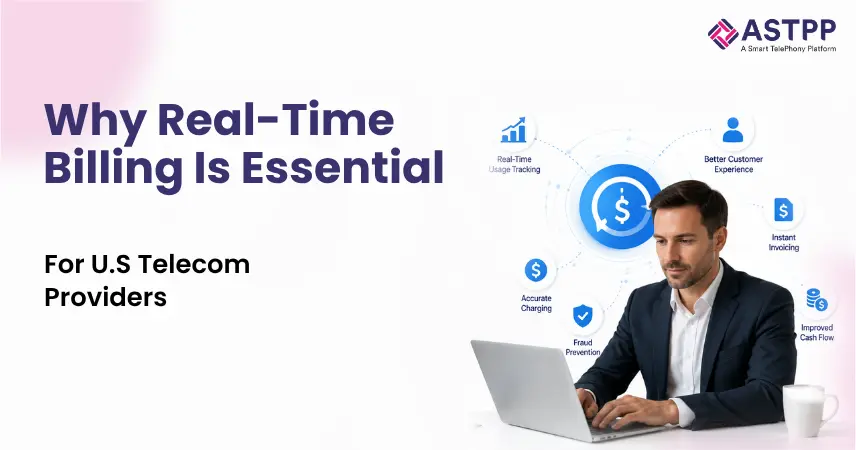
Quick Summary: Real-time charging and billing help US telecom providers improve revenue accuracy, control balances, prevent leakage, and respond to usage changes. This guide explains why real-time billing matters for telecom operations and how it supports financial control, customer experience, and growth.
Every call, message, and data session affects your revenue. If they are not charged accurately in real time, revenue can slip away without being noticed. That is why a real-time billing solution has become essential for telecom operators that want to stay profitable.
For VoIP providers, ITSPs, and wholesale carriers, traditional batch billing is no longer enough. Since it processes usage after the event, billing errors and revenue leakage may go unnoticed until it is too late to recover the loss.
In this blog, we’ll explain how a real-time billing solution helps prevent revenue leakage, why real-time charging is important for modern telecom networks, and what to look for in telecom billing software designed for today’s operators.
The US Telecom Market Has Changed, and Billing Has to Keep Up

The US telecom industry is evolving, and billing systems need to keep pace. With the growth of prepaid services, increasing 5G adoption, and rising data usage, operators are processing more transactions than ever before.
These changes make traditional billing systems less effective. Every call, message, and data session must be rated and charged as it happens to ensure accurate billing and prevent revenue loss.
This is where an online charging system for telecom operators becomes essential. It authorizes, rates, and charges every usage event in real time, helping operators maintain accurate balances, support prepaid services, and manage growing network traffic with confidence.
Where the Money Leaks: The Real Cost of Delayed Billing
Revenue leakage rarely comes from one big mistake. Instead, it happens through many small billing errors that build up over time. Billing gaps, system errors, and misconfigured tariffs can all lead to lost revenue if they are not detected and resolved quickly.
People Also Read: How Real-Time Billing Helps Telecom Businesses Prevent Revenue Leakage
Even conservative estimates show the impact is significant. As of October 2024, the telecom industry’s average revenue leakage was about 1.9% of total revenue, while some operators lose 3% to 8% due to internal billing issues.
Fraud is another major challenge. The Communications Fraud Control Association reported $39 billion in telecom fraud losses during 2023, accounting for more than 2% of global telecom revenue.
Most of this revenue loss comes from common billing problems, and delayed billing makes them even worse.
- Unbilled calls: A call record never reaches the CDR billing system, so the call is completed but never charged.
- Prepaid overruns: With delayed billing, customers can continue using services after their balance runs out, leaving the operator to absorb the cost.
- Rate mismatches: The price charged to the customer doesn’t match the carrier’s cost, reducing profit margins.
- Misconfigured tariffs: Incorrect tariffs or discounts are applied to customer plans.
- Reconciliation gaps: Billing issues are discovered only after the billing cycle ends, making them difficult or impossible to recover.
The common problem is timing. Traditional billing systems detect these issues after they happen. A real-time VoIP billing system identifies and prevents billing errors as they occur, helping operators protect revenue.
What Real-Time Charging Actually Does
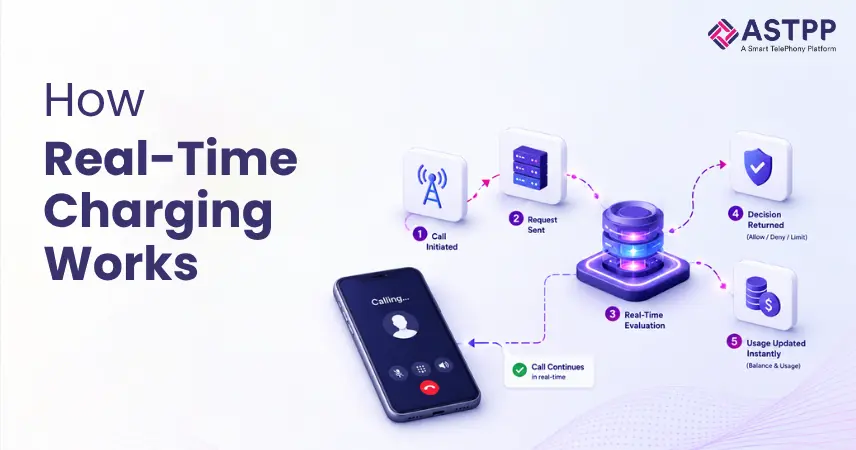
Real-time charging means every billable event is authorized and charged the moment it happens instead of being processed later in a batch. At the center of this process is the OCS telecom platform, which manages customer balances and charging in real time.
For a prepaid customer, the process works like this:
- Before the call connects, the OCS checks the customer’s balance and reserves the required credit.
- It calculates the maximum call duration based on the available balance.
- While the call is active, the balance is updated continuously using nibble billing.
- When the call ends, the exact charge is applied immediately, and the account balance is updated.
This is why prepaid billing for telecom depends on real-time charging. Since there is no monthly invoice, the system must verify and deduct the balance during the call. Traditional batch billing cannot prevent customers from exceeding their available credit during an active session.
For postpaid and wholesale telecom services, real-time charging also helps protect revenue. By combining routing and rating on the same platform, operators can apply the correct billing rate while selecting the most cost-effective route for every call, helping maintain healthy margins.
Why This Matters Specifically for US Providers
US telecom providers face unique challenges that make real-time charging more than just an upgrade. It has become essential for protecting revenue, ensuring compliance, and managing growing network traffic.
1. Prepaid growth requires real-time billing
As more customers choose prepaid services, operators need to verify account balances before every billable event. An online charging system for telecom operators authorizes and deducts balances in real time, helping prevent credit overruns and billing errors.
2. Better support for compliance and audits
US telecom providers must maintain accurate and traceable billing records to meet tax, compliance, and audit requirements. A real-time voip billing solution records every billable event as it happens, making reporting and audits much easier to manage.
3. Protecting wholesale margins
For wholesale telecom providers, even small billing errors can reduce profits. A CDR mismatch or incorrect rating can quickly affect margins when handling high call volumes. Strong revenue assurance for telecom operators helps ensure every call is rated accurately, and every billable event is captured.
What to Look for in a Real-Time Billing Platform
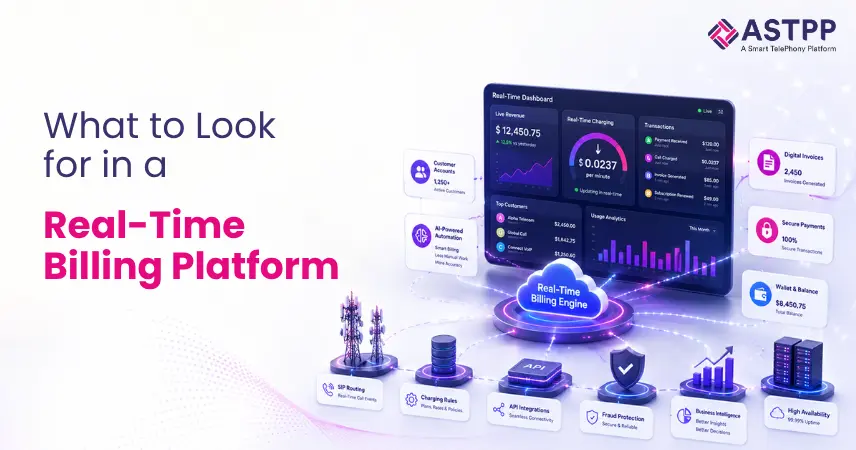
Not every platform that claims to offer real-time billing charges customers during an active session. When choosing telecom billing software, look for features that support the needs of modern telecom operators.
- A true OCS with live balance authorization and continuous nibble billing, not just faster batch processing.
- Integrated Least Cost Routing (LCR) and billing on the same platform to keep routing costs and billing rates aligned.
- Real-time CDR processing with re-rating capabilities to update historical records when rates change.
- Support for both prepaid and postpaid billing within a single BSS platform.
- Built-in fraud detection to identify suspicious activity as it happens.
- Multi-tenant and multi-level reseller billing for operators managing resellers or MVNO environments.
- Carrier-grade scalability and high availability to ensure continuous billing and avoid revenue loss during outages.
How ASTPP Delivers Real-Time Charging for US Operators
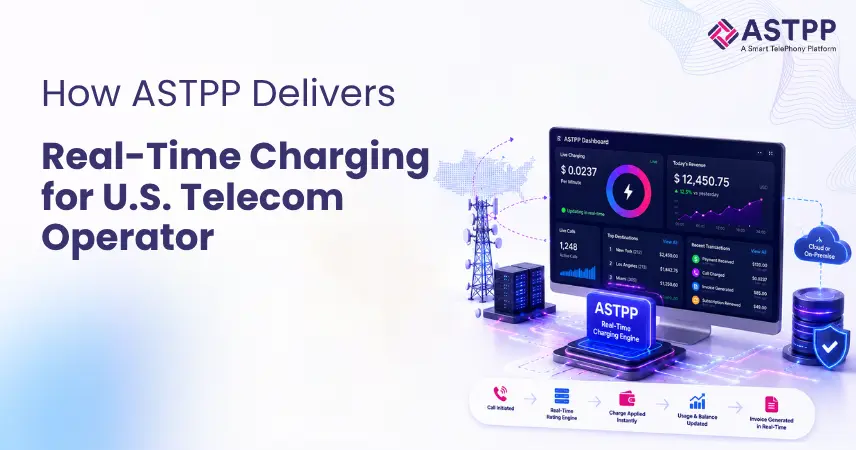
ASTPP is a carrier-grade VoIP billing and softswitch platform that provides real-time billing within the call routing process. Instead of processing billing after the call ends, ASTPP makes billing part of the live call flow.
For US telecom providers, this means:
- ASTPP’s OCS checks balances, reserves credit, and controls call duration before a prepaid call starts. It then applies the exact charge when the call ends.
- Every call is recorded through CDR generation and rated in real time, with re-rating support for updating billing records after rate changes.
- LCR (Least Cost Routing) decisions and billing work together on the same platform, ensuring routes and rates stay aligned.
- Multi-tenant and multi-level reseller billing allow operators to manage complex reseller structures without multiple disconnected systems.
- Flexible deployment options, including cloud, on-premises, and HA clusters, support the reliability required for real-time telecom operations.
The result is stronger revenue assurance for telecom operators with fewer billing errors, better prepaid control, and improved margin protection at scale.
ASTPP helps operators run carrier-grade VoIP billing solutions with the flexibility and performance needed for modern telecom businesses.
Real Business Scenarios
See how real-time charging and billing solve everyday challenges for telecom providers, wholesalers, and ITSPs.
1. A prepaid ITSP protecting balances
A prepaid ITSP with thousands of subscribers cannot depend on batch billing to control customer balances. With a real-time OCS telecom platform, balances are checked during active calls, services stop automatically when credit runs out, and auto-refill helps customers stay connected without manual intervention.
2. A wholesale carrier protecting margins
A wholesale carrier handling high call volumes needs accurate, real-time rating for every call. With real-time billing, each call is tracked, rated, and recorded immediately. Since LCR and billing are connected on the same platform, the operator can select cost-effective routes while maintaining accurate rates and protecting margins.
3. A reseller-driven operator scaling efficiently
Operators managing reseller networks need flexible billing structures. Multi-level reseller billing allows each partner to manage their own branded billing environment while the main operator maintains centralized control and visibility across the entire business.
The Bottom Line
For US telecom providers, real-time charging is not just about technology, it is about protecting earned revenue. With growing prepaid usage and increasing network activity, every call, message, and data session needs to be rated accurately as it happens.
Traditional batch billing identifies problems after they occur, when lost revenue may already be difficult to recover. A real-time billing solution powered by a reliable OCS telecom platform helps prevent billing gaps, improves revenue assurance for telecom operators, and gives businesses the control they need to scale with confidence.


